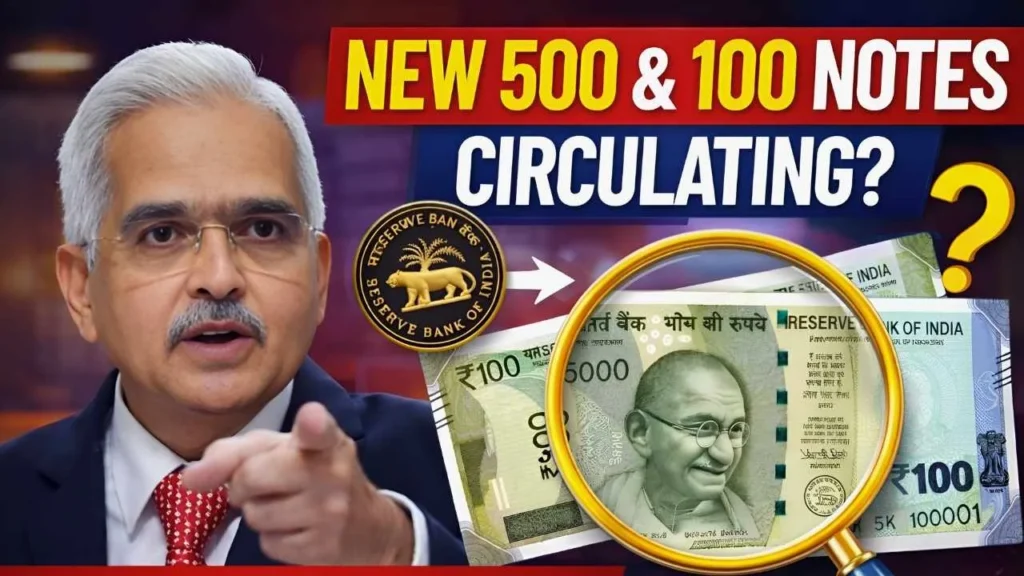
RBI ₹500 Note Rules 2026: Cash continues to play a powerful role in India’s economy, and the ₹500 note remains one of the most frequently used denominations across cities, towns, and villages. Whether it is paying rent, settling a restaurant bill, purchasing fuel, or handling business transactions, this note circulates heavily every single day. In 2026, updated clarifications and reinforced compliance instructions from the Reserve Bank of India have once again drawn public attention. Understanding the latest ₹500 note rules is essential for every Indian citizen to avoid confusion, fraud, or unnecessary panic.
Stronger Security Awareness Drive
The central bank has intensified its awareness campaign regarding the security features embedded in the ₹500 note. While the design remains based on the Mahatma Gandhi New Series, citizens are being reminded to carefully examine features such as the see-through register, security thread with color shift, micro-lettering, latent image, and watermark portrait. The focus in 2026 is not on redesign but on public education. Banks and financial institutions are encouraging individuals to verify notes before large transactions to reduce counterfeit circulation risks.
No Withdrawal Or Replacement
One of the biggest rumors circulating periodically is the alleged withdrawal of the ₹500 note. As of 2026, there has been no official decision to discontinue this denomination. The ₹500 note remains fully legal tender across India. Authorities have clarified that social media messages claiming sudden bans or exchange deadlines are misleading. Citizens are advised to rely only on official notifications issued by the central banking authority and avoid reacting to unverified viral posts that create unnecessary panic in the market.
Guidelines For Damaged Notes
Fresh emphasis has been placed on the proper exchange of mutilated or soiled ₹500 notes. Banks are required to follow standardized note refund rules when customers present damaged currency. If the note retains key security features and more than the prescribed portion is intact, it can be exchanged at bank branches. However, intentionally damaged notes, such as those burned or torn deliberately, may not qualify. Individuals should avoid writing, stapling, or excessively folding currency to prevent rejection during exchange.
Counterfeit Detection Measures
With the advancement of printing technology, counterfeit attempts continue to evolve. In response, the banking system has upgraded detection machines across branches and ATMs. Cash deposit machines now automatically scan and reject suspicious ₹500 notes. Businesses handling large volumes of cash are being advised to use UV scanners or verification devices. Citizens are also encouraged to cross-check suspicious notes at the nearest bank branch instead of re-circulating them, which could lead to legal complications.
Cash Deposit Monitoring Rules
Another important area of focus in 2026 relates to cash deposit transparency. Large deposits of ₹500 notes may be subject to standard reporting requirements under financial regulations. Banks monitor unusual transaction patterns to prevent illegal activities such as money laundering or tax evasion. This does not mean everyday deposits are restricted, but individuals making high-value cash deposits should ensure proper documentation and compliance with income reporting norms to avoid scrutiny from financial authorities.
ATM Dispensing Standards Updated
Banks have been instructed to maintain high-quality note circulation through ATMs. Worn-out or excessively soiled ₹500 notes are being gradually removed from automated machines to improve user experience. Cash sorting centers are required to filter unfit notes and send them for shredding and replacement. This step ensures that citizens receive cleaner, machine-readable notes, reducing transaction failures in vending machines, toll booths, and fuel stations.
Digital Push Alongside Cash
While cash remains significant, the financial ecosystem continues to promote digital payments as a parallel option. Authorities emphasize that the ₹500 note is not being restricted, but citizens are encouraged to adopt digital platforms for transparency and convenience. The goal is balanced usage rather than elimination of physical currency. Small businesses and street vendors are increasingly accepting both cash and digital modes, ensuring flexibility for consumers.
Legal Implications Of Fake Notes
Possession or circulation of counterfeit ₹500 notes carries legal consequences under Indian law. Even unknowingly passing a fake note can create complications if it is proven that due diligence was ignored. Citizens are advised to immediately report suspicious currency to bank officials or law enforcement. Keeping awareness of security features is the simplest way to avoid accidental involvement in counterfeit circulation cases.
Awareness For Rural Areas
Special awareness drives are being conducted in semi-urban and rural regions where cash transactions dominate. Workshops, posters, and educational materials help people understand how to identify genuine ₹500 notes. Banking correspondents and cooperative banks are playing a vital role in spreading information. This initiative ensures that even remote communities remain protected from fraud and misinformation.
Market Confidence Remains Stable
Despite periodic rumors, the ₹500 note continues to hold strong acceptance across retail, wholesale, and institutional transactions. Businesses have not reported any disruption in acceptance patterns. Confidence in this denomination remains stable due to consistent regulatory clarity. The focus of 2026 is stability, fraud prevention, and smoother circulation rather than radical changes.
Final Word: RBI ₹500 Note Rules 2026
The ₹500 note remains a crucial backbone of India’s cash economy in 2026. There is no ban, no redesign mandate, and no exchange deadline currently in place. What has changed is the emphasis on awareness, security verification, and responsible handling. By understanding official guidelines, checking security features, and avoiding rumor-driven decisions, citizens can continue using ₹500 notes confidently. Staying informed through authentic announcements ensures financial peace of mind in an evolving economic landscape.